
Shearing Alpacas and Llamas
Alpacas can produce up to 5kg of fibre per year, so for welfare reasons they usually need shearing yearly. To get the most from their gorgeous fibre, it’s best to get a specialist alpaca shearer to ensure that it is processable, and to ensure it is removed quickly and safely causing minimum stress to the alpaca (and owner!)
Llamas can also require shearing often every other year as they do not continuously grow fibre and have 2 coats. Some types of llama require brushing to remove the shed-able undercoat. There are different llama cuts such as the saddle cut which cools the llama down and leaves a nice clear back for loading as they are packing animals.

After shearing you will need to make sure your alpacas are able to acclimatise over the following three weeks as their fibre regrows. This means ensuring shelters are available at all times, and rugs may be needed for vulnerable animals, especially if the weather is wet or unseasonably cold.
We sell special lightweight alpaca rugs which are ideal post shearing on changeable spring/summer days and stop alpacas shivering when it’s cold or wet, and sweating when the sun comes out. You can purchase them HERE.

Alpacas are only sheared in the Spring and early Summer so alpaca shearers are in demand all at the same time so do book your shearer well ahead.
Here is a list of shearers from the BAS website.
Fun hairstyles are tempting but do consider if they are healthy for the alpacas – a “bobble head” where all the head fibre is left can cause jaw problems and obscures sight. However the mullet is a safer alternative depending on taste!!
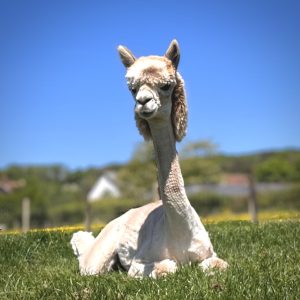 They should always be left with enough fibre on the head to act as a “sunhat” yet be able to see fully. Their tails should have enough fibre to stop sunburn but enough removed to deter flies and fly strike risk. The blanket fleece should be removed first and kept free from debris and the alpaca must never be rolled onto its back during shearing. These are just a few points but for a comprehensive shearing factsheet please click this link from the BAS website.